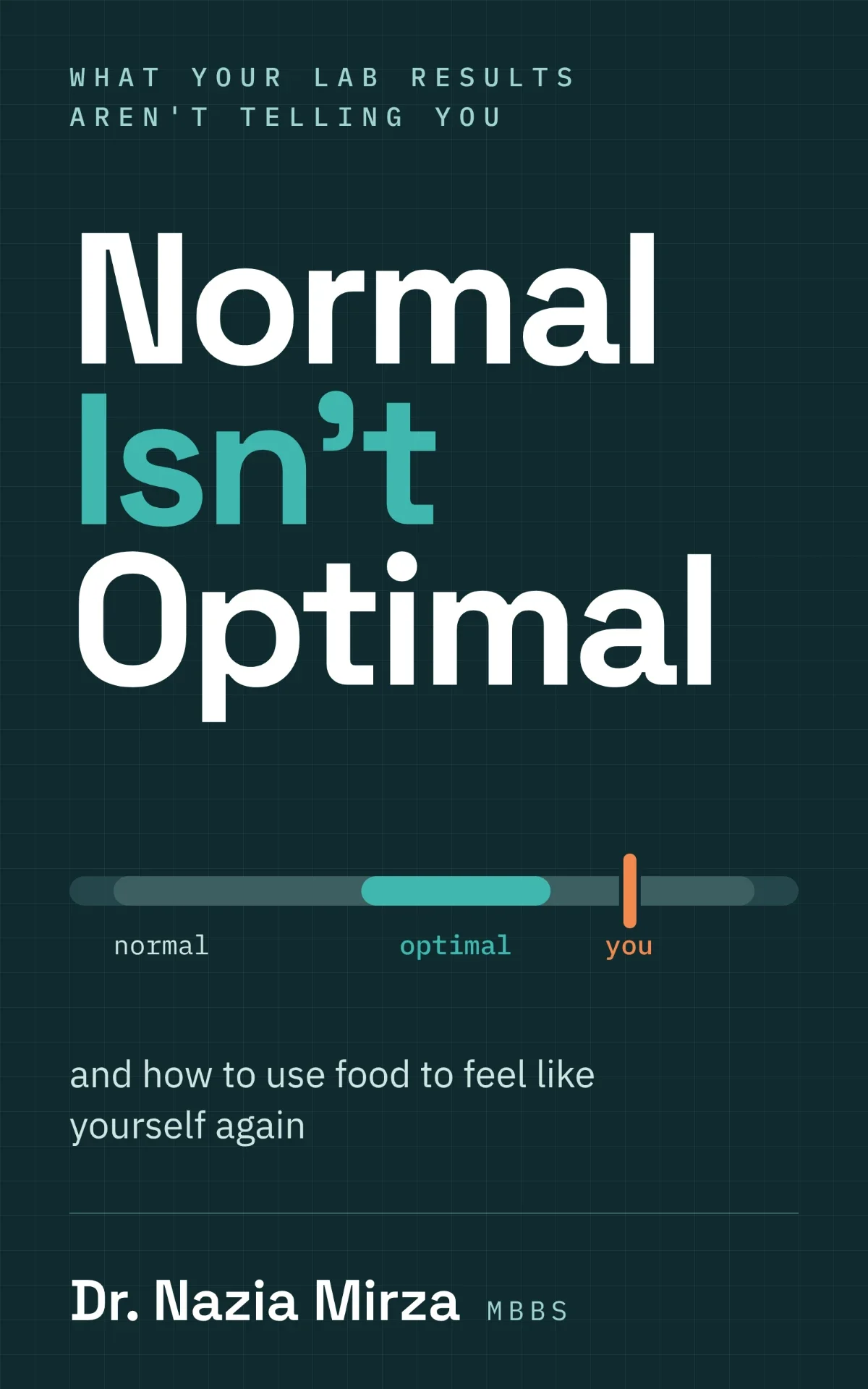
A short excerpt from Chapter 1 by Dr. Nazia Mirza, MBBS.
Let me tell you about a composite of many people I’ve spoken with. Call her Lina.
Lina is 47. She works full time, cares for a teenager and an aging father, and has felt “off” for about two years. She is tired by mid-afternoon. Her jeans are tighter around the waist even though she eats the way she always has. She went to her doctor, had blood drawn, and a few days later got a portal message: “Your labs look normal. No action needed.”
She opened the report. Every number sat quietly between two other numbers. No red flags, no asterisks. Her fasting glucose was 99 mg/dL (5.5 mmol/L). The range said 70 to 99. Her hemoglobin A1c was 5.6%. Her ALT, a liver enzyme, was 38 U/L, under a cutoff of 40.
She should have felt relieved. Instead she felt dismissed. If everything is normal, why don’t I feel normal?
When I review reports like Lina’s with readers and family members, I see something different. I see a fasting glucose sitting one point below the prediabetes line. I see an A1c one-tenth of a percent below it. I see a liver enzyme that would be above the “healthy” limit some researchers have proposed for women. None of this is an emergency. None of it is a diagnosis. But together, it is a story, and it is worth hearing early.
To understand why Lina’s report said “normal,” we need to ask a question most of us never think to ask: Who decided what normal is?
End of excerpt
Lina is a fictional composite used for illustration. Laboratory results require interpretation in the context of your medical history and the laboratory’s methods.